Currently Empty: ₹0.00
Pichwai Painting: Meaning, History and Themes of Shrinathji Pichwais
Quick answer: A pichwai (pichhwai) is a large devotional painting, usually on cloth, that hangs behind the swarup of Shrinathji or Thakorji in Pushtimarg seva. The word means “that which hangs at the back”. Pichwais portray Krishna’s leelas and are changed according to the festival calendar and season, so the backdrop always matches the day’s darshan. The tradition is closely linked with the Shrinathji Temple at Nathdwara in Rajasthan.
For many Vaishnav families, a pichwai is the heart of the home mandir. It sets the mood of seva, tells a story from Krishna’s life, and changes with the year’s utsavs. Here is what a pichwai is, where it comes from and how to choose one.
What Does Pichwai Mean?
The word comes from pichh, meaning back, and wai, meaning hanging, so a pichwai is literally the painting that hangs behind the deity. According to Wikipedia’s overview of pichhwai art, these large devotional paintings portray Krishna and are mainly made for temples of the Pushtimarg tradition, especially the Shrinathji Temple at Nathdwara, built around 1672.
Why Are Pichwais Hung Behind Shrinathji?
Pichwais serve two purposes in Pushtimarg seva:
- As a backdrop in the inner sanctum, where they are changed in line with the season, festival and ritual of the day.
- As a record of worship, where artists document the rituals, shringar and celebrations offered to Shrinathji.
Because temples keep sets of pichwais for different occasions, the painting behind Thakorji tells devotees which leela or utsav is being celebrated.
What Themes Do Pichwai Paintings Show?
| Theme | What it depicts | When it is used |
|---|---|---|
| Annakut and Govardhan | Shrinathji with mountains of food offerings, and Krishna lifting Govardhan | Annakut and Govardhan Puja after Diwali |
| Gopashtami and cows | Krishna with cows and gopas, often with Nandbaba’s herd | Gopashtami and cow-related utsavs |
| Raas leela | Krishna dancing with the gopis | Sharad Purnima and Raas utsav |
| Janmashtami and Nand Mahotsav | Krishna’s birth and the celebrations in Gokul | Janmashtami and the day after |
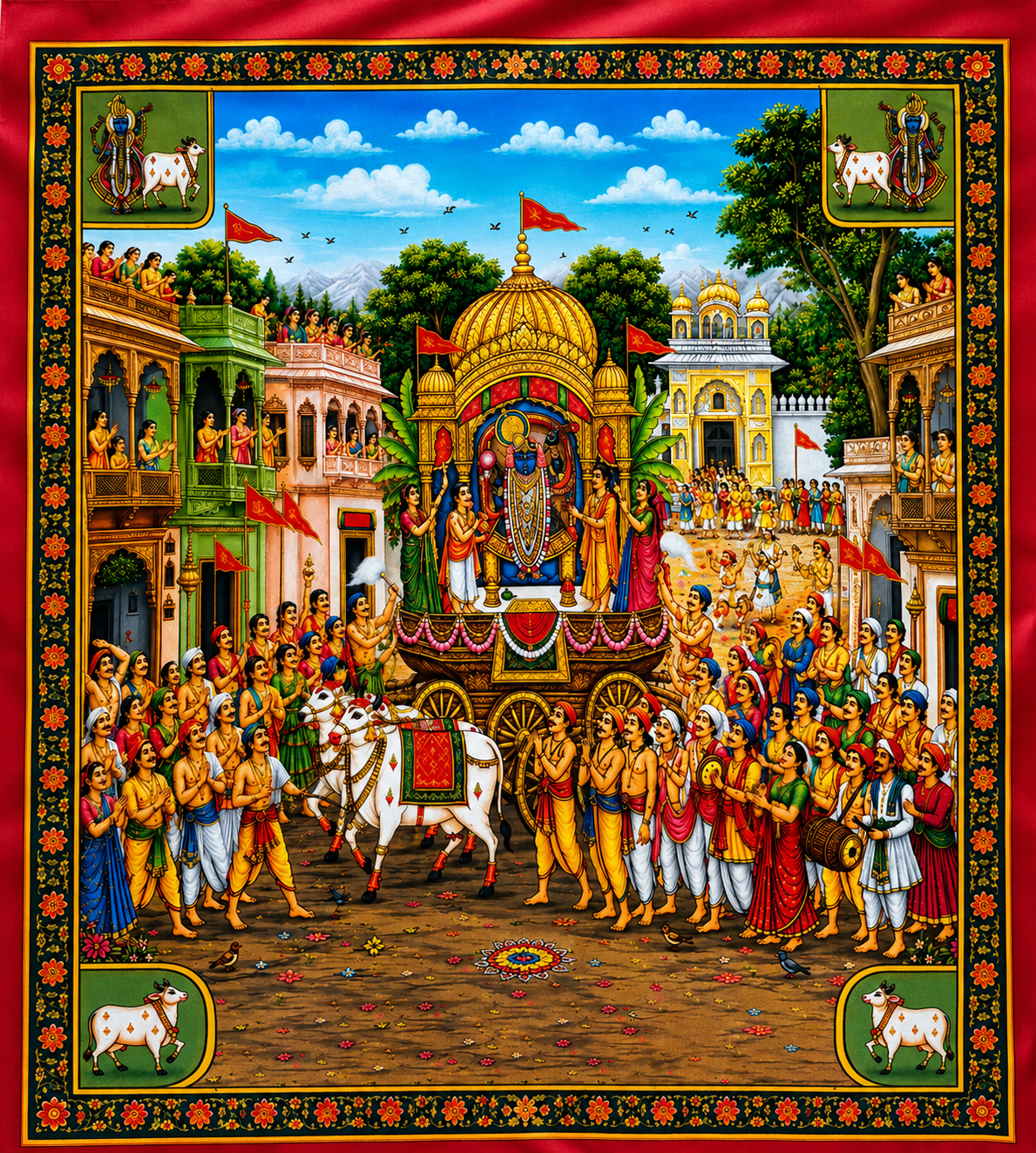
| Rathyatra | Thakorji in his chariot procession | Rathyatra utsav |
| Lotus and pichwai of the seasons | Lotus ponds, kunj (groves), cows and birds | Summer and everyday seva |
Many pichwais also show Yamunaji, Vallabhacharya, the Ashtasakha poets or Goswamis of the sampradaya alongside Shrinathji.
How Did Pichwai Art Develop?
When the Shrinathji temple was established, Vitthalnathji, son of Vallabhacharya, engaged artisans to create pichwais for worship. These were originally made only on commission for temple use. As the sampradaya spread to Gujarat, Mathura and beyond, the style travelled with it, and pilgrims and families began taking pichwais home. Today, artists in Nathdwara’s Chitron ki Gali (street of paintings) continue the tradition, and pichwais are prized by devotees and collectors alike.
How Do You Choose a Pichwai for Your Home Mandir?
- Size: measure the back wall of your mandir or seva area. The pichwai should frame the swarup without crowding it.
- Theme: choose a pichwai for the current season or utsav, or a general theme such as kunj, lotus or cows for everyday seva.
- Material: painted cloth gives the traditional look, while printed pichwai fabric is lighter and easier to change often.
- Colour: match the pichwai with the vastra and shringar you plan to offer.
- Care: store pichwais rolled, not folded, in a dry cloth cover.
Browse festival pichwais such as the Rathyatra Pichwai, Nand Mahotsav Pichwai and Ashtasakha Pichwai in the pichwai collection. For softer, washable backdrops, pichwai print cotton fabric can be stitched to the exact size of your mandir.
Frequently Asked Questions
What is a pichwai painting?
A pichwai is a large devotional painting, usually on cloth, hung behind the swarup of Shrinathji or Thakorji to depict Krishna’s leelas and the festival of the day.
Where did pichwai art originate?
Pichwai art is closely linked to the Shrinathji Temple at Nathdwara in Rajasthan and the Pushtimarg tradition of Vallabhacharya.
Why are pichwais changed?
Pichwais are changed according to the season, festival and ritual of the day, so the backdrop matches the darshan being offered.
What is the difference between a painted pichwai and pichwai print fabric?
A painted pichwai is hand-painted art, while pichwai print fabric carries a printed design and is lighter, more affordable and easier to wash and change.
How should I store a pichwai?
Roll it carefully rather than folding, wrap it in a soft cloth and keep it in a dry place away from direct sunlight.
Bring a Pichwai Home for Seva
Nitya Nivedan offers pichwais, pichwai fabrics and shringar for Thakorji seva. Explore the pichwai collection or contact us for help choosing the right size and theme.
